
Avoidant attachment.
If you tend to feel calm and capable on your own, but strangely crowded the moment someone gets close, you may recognize the avoidant pattern, sometimes called dismissive-avoidant attachment. It is not coldness or a lack of love. It is a nervous system that learned early that the safest move was to need less and handle things alone.

What avoidant attachment actually is.
Avoidant attachment is one of the insecure adult patterns described in research on adult romantic bonds. In Bartholomew and Horowitz's four-category model it looks like a positive view of the self paired with a lower view of depending on others, roughly, I am fine on my own and leaning on people rarely ends well. Closeness is not unwanted. It just tends to arrive tangled with a fear of being controlled, disappointed, or engulfed, so the instinct is to keep a little distance in reserve.
of adults show a mainly avoidant or dismissing pattern across population studies
researchers describe avoidance as a strategy that turns attachment needs down rather than up
avoidant patterns can soften toward secure with safe, repeated closeness
Figures are approximate ranges drawn from adult attachment surveys and reviews. Attachment is a spectrum, not a fixed label.
How avoidant attachment develops in childhood.
Avoidant attachment often grows where a child's bids for comfort were quietly discouraged. Maybe emotions were treated as too much, or independence was praised while needs were met with distance. The child adapts by turning the volume down, learning not to reach, not to cry, not to ask, because self-reliance felt safer than risking a door that might not open. That early solution becomes a lifelong reflex.
- Comfort or big feelings were met with discomfort or withdrawal
- Independence was praised, sometimes before the child was ready
- Emotional needs were treated as inconvenient or a burden
- Self-reliance became the surest way to stay safe and approved of
Signs in adult relationships.
Needing space under stress
When things get intense, your instinct is to pull back, go quiet, or handle it alone rather than reach for your partner.
Prizing independence
You value self-sufficiency highly and can feel uneasy when a relationship starts to feel like it needs you.
Deactivating closeness
Just as things get serious, you notice the flaws, miss an ex, or feel the urge to create distance.
Discomfort with big emotions
A partner's strong feelings can feel like pressure or an emergency you want to escape.
Keeping an exit in mind
You rarely feel fully all in, holding a quiet backup plan even in good relationships.
Feeling crowded by needs
Bids for reassurance or more time can register as demands rather than invitations.
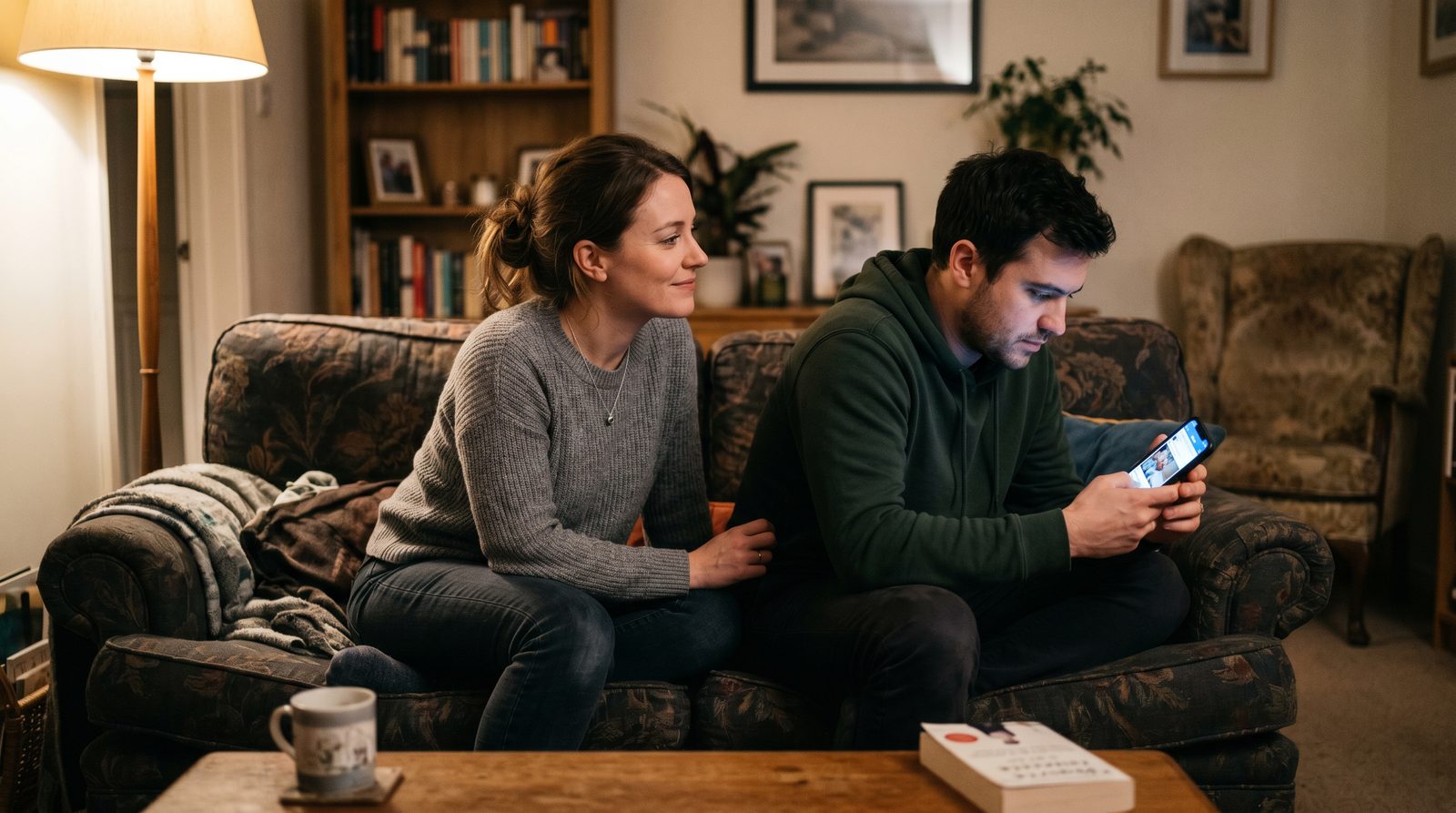
The anxious and avoidant loop.
Avoidant and anxious partners often find each other, then get stuck. When closeness intensifies, the avoidant partner pulls back to feel safe, which reads to an anxious partner as abandonment, so they reach harder, which feels like pressure, so the avoidant partner withdraws further. Neither is the villain. One nervous system is asking for space to feel safe while the other is asking for closeness to feel safe. Seeing the pattern rather than the person is where it starts to change.
How to work with an avoidant attachment style.
- 01
Notice the urge to distance before you act on it
The flaw-finding, the sudden need for space, the pull toward an exit are often deactivation, not truth.
- 02
Name your need for space out loud
Saying 'I want to keep talking about this, I just need twenty minutes first' turns a shutdown into a promise your partner can trust.
- 03
Let small moments of closeness stay
Practice staying present a little longer than is comfortable rather than reaching for the exit.
- 04
Reframe needs as connection, not demands
A partner asking for more is usually reaching for you, not trying to trap you.
What this page draws on.
- Bowlby, J. (1969/1982). Attachment and Loss, Vol. 1: Attachment. Basic Books.
- Ainsworth, M. D. S., Blehar, M. C., Waters, E., & Wall, S. (1978). Patterns of Attachment: A Psychological Study of the Strange Situation. Erlbaum.
- Hazan, C., & Shaver, P. (1987). Romantic love conceptualized as an attachment process. Journal of Personality and Social Psychology, 52(3), 511–524.
- Bartholomew, K., & Horowitz, L. M. (1991). Attachment styles among young adults: a test of a four-category model. Journal of Personality and Social Psychology, 61(2), 226–244.
- Mikulincer, M., & Shaver, P. R. (2016). Attachment in Adulthood: Structure, Dynamics, and Change (2nd ed.). Guilford Press.
This page is educational and supportive, not a diagnostic tool or a substitute for professional care. If you are in crisis, please contact a qualified professional or your local emergency services.
Free guide
The 5 Conversations Every Couple Keeps Avoiding.
A short, honest guide to the talks most couples put off, and the calmer ways to have them. We'll email it to you now.
Three ways to take this further.
Reading about your style is a start. Practicing it in real conversations is where the change actually lives.
Work with the AI coach
A voice coach that joins your real conversations and helps you both feel heard.
Start freeTake the free quiz
A short, science-aligned reflection that maps your dominant pattern in close relationships.
Start the quizInvite your partner
Send a warm email invite so you can both take the quiz and compare styles.
Send inviteAttachment is a spectrum, not a label.
Anxious
Craves closeness and fears losing it. Reaches louder when connection feels uncertain.
Read StyleFearful-Avoidant
Wants closeness and fears it at the same time. Also called disorganized.
Read StyleSecure
Comfortable with both closeness and space. Trusts, repairs, asks directly.
Read StyleAll four styles
Return to the hub for a side-by-side overview of every style.
Read